
Dota 2 Behavior Score: Why It Drops and How to Raise It
Your behavior score (the conduct summary in the client) feels like it slides on its own. You didn't grief anyone, yet the number keeps slipping. It doesn't. Every drop has a concrete cause: a counted report, an abandon, or a run of toxic games stacked too close together. Here's what actually pulls the score down, and what actually brings it back.
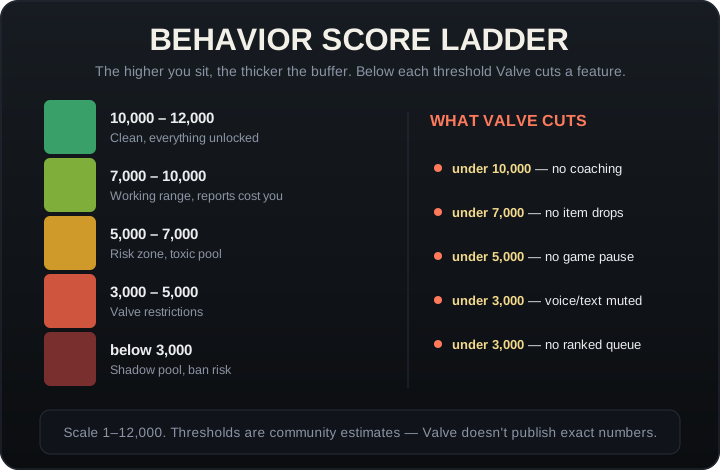
What behavior score even is
It's an internal read on your conduct, sitting on a 1 to 12,000 scale and updated after your games. Nobody sees the exact number on you, but it quietly decides which pool you queue in and how close you are to low priority. It's computed over a span of games, not one match. So one bad night won't sink you, and one clean game won't save you either.
What pulls the score down
- Abandons: the heaviest hit by far. Leaving a match lowers the score directly, no report from anyone required.
- Counted communication reports: toxic text and voice. Tracked on their own lane.
- Counted behavior reports: griefing, intentional feeding, sabotage.
- Clustering: three ugly games in one evening weigh more than the same three spread across a month.
The word that matters is counted. Raw report count tells you almost nothing. The system weights every report by who's handing it out, so a tilted lobby spraying you at the GG screen barely registers. More on that in what the report system really tracks.
What raises the score
- Calm, finished games: no abandons, no counted reports. The score climbs back on its own over time.
- Commends for friendly play, shotcalling and teaching. They work in your favor and soak up the noise from random reports.
- Consistency. A steady run of normal games beats one perfect match every time.
Behavior score rises slower than it falls. That's just how it works, and it's not a bug. There's no instant reset, no magic button. The only hard reset is climbing out of low priority the long way, by winning.
Find out what's costing you score →
How to find your cause instead of guessing
Stop theorizing and look at the receipts. Paste a Match ID on the home page and the replay breakdown shows you who pressed Report, at what minute, in what context. Nine times out of ten the same trigger keeps coming back: alt-pinging a teammate, flaming the second you die, taunting in a lost fight. That's the part you can actually fix yourself, and the moment you do, the bleeding stops.
FAQ
Why did my score drop when I wasn't even rude? Usually an abandon, or a string of counted comms reports that felt like nothing at the time. Re-watch your last few games in the breakdown and you'll spot it.
How many games raise behavior score? Valve never gives a number. It climbs from a steady run of clean, finished matches, not from one game, so don't bother counting.
Can I see who reported me? The replay shows who pressed Report. What's real and what's myth: who reported me in Dota 2.